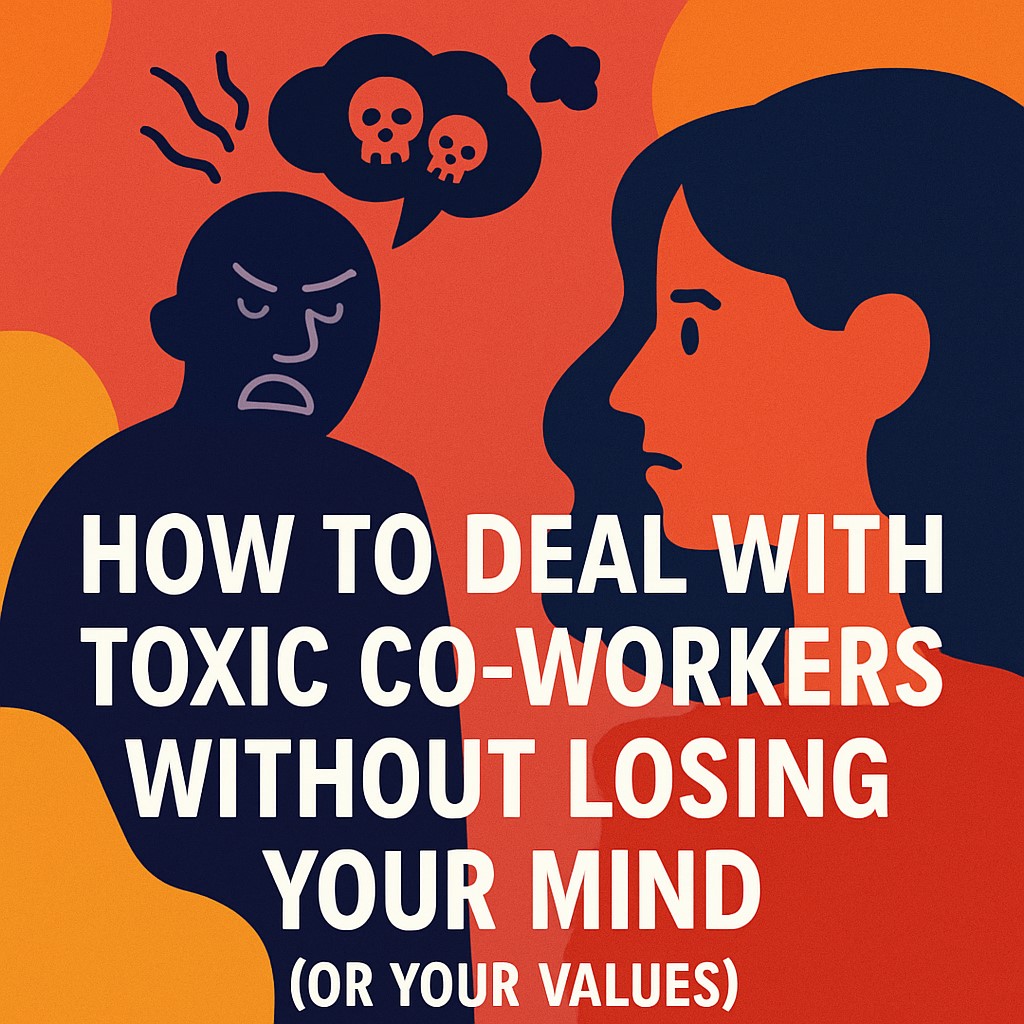
How to Deal with Toxic Co-Workers Without Losing Your Mind (or Your Values)
- 23/07/2025
- 3
- HR Consultants
Toxic behaviors in the workplace often follow recognizable patterns — regardless of industry, company size, or team structure. Understanding these patterns is key to navigating them without losing focus, confidence, or professionalism.
Let’s be honest: almost everyone has crossed paths with a toxic colleague at some point. You know the type — always complaining, undermining others, stirring drama, playing the victim, or simply draining everyone’s energy.
And while HR policies might not label them as "toxic," their impact on the team’s morale, collaboration, and productivity is very real.
1️⃣ Stop trying to fix them
🛑 Toxic behavior usually stems from deep‑rooted personal patterns. You're not their therapist, and it's not your responsibility to solve their issues. Shift your energy from changing them to managing your own responses and protecting your emotional space.
2️⃣ Set boundaries — silently if needed
🧱 Not every boundary needs to be spoken out loud. Sometimes it's enough to stop over‑engaging, step away from unproductive conversations, or politely excuse yourself. Limiting your exposure to toxic dynamics isn’t rude — it’s responsible.
3️⃣ Don’t match their tone
🔇 It's easy to mirror negativity, especially when emotions run high. But reacting with sarcasm, frustration, or passive‑aggressive behavior only fuels the cycle. Responding with clarity, calmness, and neutrality helps break the pattern — and keeps your reputation intact.
4️⃣ Document when necessary
📝 When toxic behavior crosses the line into harassment, manipulation, or sabotage, documentation matters. Keep factual, non‑emotional notes. If things escalate, this will help HR or leadership address the situation fairly and objectively.
5️⃣ Keep your identity intact
🧭 Being around toxic energy can make even the most grounded professional question their instincts or withdraw emotionally. Stay connected to who you are — your values, your tone, your integrity. That's your anchor.
🚨 Toxicity in the workplace isn’t always loud or obvious. Sometimes it shows up in subtle ways: eye rolls, exclusion, backhanded compliments, or unresolved tension. Recognizing the signs early and responding with awareness is key to staying well — and helping shape a healthier work environment.
🧘 Toxic co‑workers may not disappear overnight. But your ability to stay calm, hold your boundaries, and protect your values? That’s something you can control — and it makes all the difference.